



Every civilisation gets the metaphor it deserves. Rome had bread and circuses. Britain had tea and opium. America, in the second week of June 2026, has a seventy-nine-year-old real estate developer posting on social media at 2 a.m. that he has, for the thirty-ninth time, achieved peace in the Middle East — this time for real, pinky promise — while fifty Tomahawk cruise missiles’ worth of annual production smoulders in the Iranian desert and the Strait of Hormuz remains as navigable as a bathtub full of mines. The Art of the Deal, ladies and gentlemen, has become the Art of the Kneel. And the kneeling, it turns out, is remarkably well distributed across the entire Western alliance.
Let us begin where all serious financial analysis must begin: with a body of water that most people cannot find on a map but through which roughly twenty per cent of the world’s oil supply is supposed to flow. The Strait of Hormuz has been effectively closed for over two months now, which, according to the models that serious people at serious institutions built before the shooting started, should have pushed Brent crude to two hundred dollars a barrel. It has not. Physical Brent touched a hundred and fifty, shrugged, and settled into the kind of uneasy equilibrium that traders describe as “reluctant calm” and normal people describe as “waiting for the other shoe to drop while standing in a shoe factory.” The reason oil has not hit the apocalyptic forecasts is not that supply is adequate. It is that the world’s largest buyer decided to take its ball and go home. China slashed crude imports from a typical eleven million barrels per day to somewhere around six or seven — a reduction so dramatic that it would have been front-page news in any other month, but in June 2026 it barely made the commodities section because everything else was also on fire, metaphorically and in several cases literally. Beijing achieved this partly by squeezing the margins of its independent “teapot” refineries — those wonderfully chaotic small-scale operators that had spent years hoovering up discounted Iranian and Russian crude like a university student at an all-you-can-eat buffet — and partly because the American naval blockade, while about as watertight as a colander, managed to divert half a million barrels per day of Iranian crude that Chinese buyers had been counting on. The teapots lost their cheap feedstock, Beijing regulated their retail prices into unprofitability, and suddenly the world’s most voracious oil consumer was on a diet. Not because it wanted to lose weight, mind you, but because it was calculating exactly how much pain everyone else would feel first.
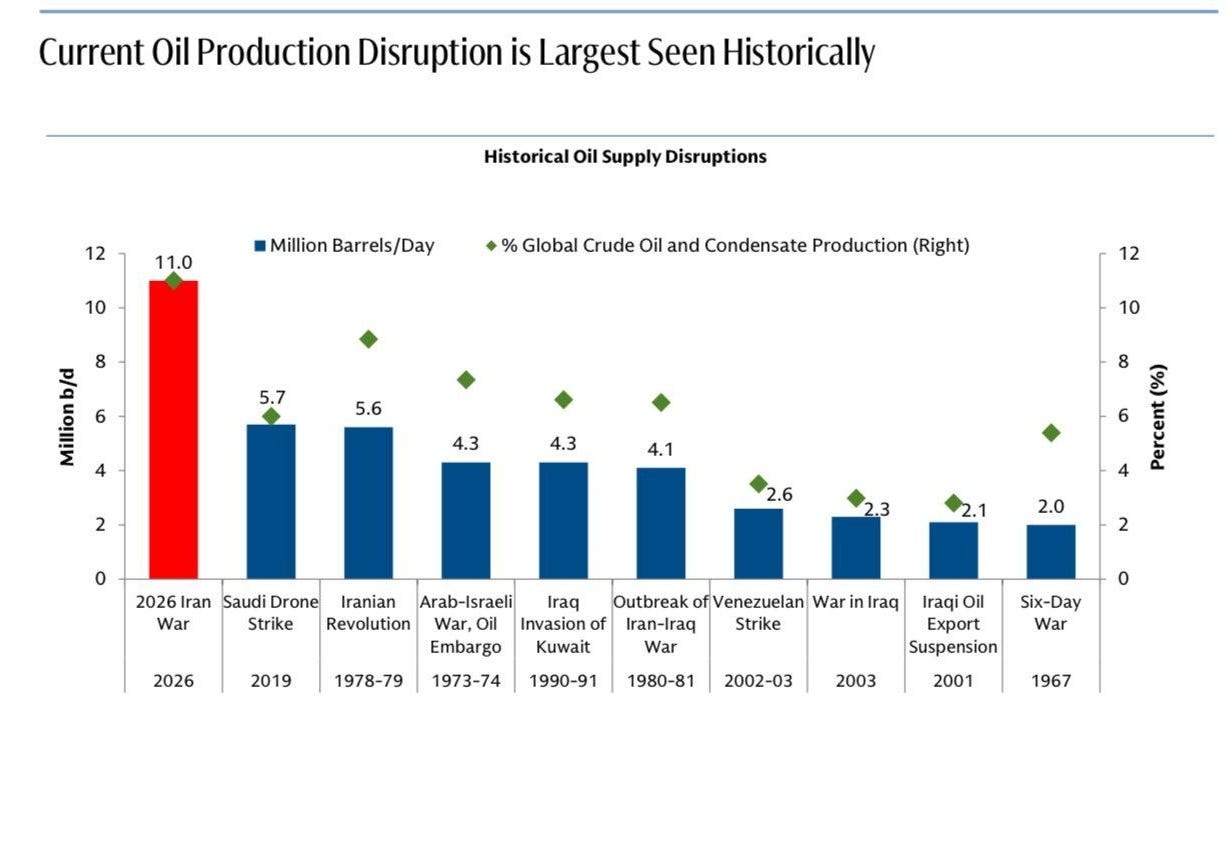
The pain, for those keeping score, is distributed as follows. Roughly a hundred million barrels of Russian oil and two hundred million barrels of Iranian oil are currently floating around the world’s oceans on tankers, unsold, undelivered, and accumulating carrying costs that would make a London landlord wince. Strategic petroleum reserves in every major consuming nation except China — whose reserves are, naturally, the only ones not being drawn down, because Beijing plays chess while everyone else plays whack-a-mole — are approaching what energy analysts call “operational minimums.” This is a polite way of saying “the level below which your refineries start running dry and your constituents start running angry.” The American Strategic Petroleum Reserve sits at approximately 350 million barrels. At current drawdown rates of ten to twenty million barrels per month, the maths become what economists call “challenging” and what normal people call “oh no” sometime around the fourth quarter. Just in time for the holidays. Happy Thanksgiving, here is your rationed diesel. And speaking of things America is running out of, let us discuss the Tomahawk cruise missile, because the Tomahawk is now doing double duty as both a weapon of war and a metaphor for imperial overstretch. The United States produces roughly ninety Tomahawks per year. The Pentagon currently procures even fewer — around fifty-six, because why would you buy the full production run of your primary standoff weapon when you could instead spend the money on a conceptual rendering of a laser-equipped battleship named after the president? In a single night’s strike against Iran in early June, approximately fifty Tomahawks were launched. That is half a year’s production, gone before breakfast. Over the broader campaign, more than a thousand have been expended. The replenishment timeline is not months. It is years. Plural. And this is the country that is simultaneously supposed to be deterring China, backstopping Europe, and maintaining global maritime security. With what, one is tempted to ask. Harsh language?
The MQ-9 Reaper drone completes the picture of an empire running on fumes and institutional inertia. Iran has shot down more than thirty of them. Total American inventory: roughly a hundred and twenty airframes. Production line: closed. The Pentagon’s solution, revealed this week with all the dignity of a man searching for coins between sofa cushions, was to approach Japan and South Korea and offer to buy back the very Reapers it had previously sold them. The pioneers of drone warfare, begging their allies to return their hand-me-downs. Somewhere, a Chinese defence planner is laughing so hard his tea is coming out of his nose. But wait, you say. Surely Europe will fill the gap. Surely the eight hundred billion euro defence package will produce results. And surely it will, in the same way that ordering a pizza produces results: eventually, partially, and with a significant portion of the total cost absorbed by the delivery infrastructure rather than the product itself. Of that headline figure, approximately a hundred and eighty-five billion euros is actually reaching military-industrial production. The Franco-German next-generation fighter programme, which was supposed to produce a European answer to the F-35, was this week officially cancelled after a decade of development, presumably because the two countries could not agree on which language the cockpit warnings should beep in. Europe will instead continue flying fourth-generation aircraft and, in the ultimate act of strategic self-abasement, buy more American jets. Or Swedish Gripens. Even Canada is considering Gripens now, which tells you everything you need to know about the state of the transatlantic defence-industrial relationship: when Canada starts shopping Swedish, the special relationship is in the intensive care unit and the priest has been called.
