


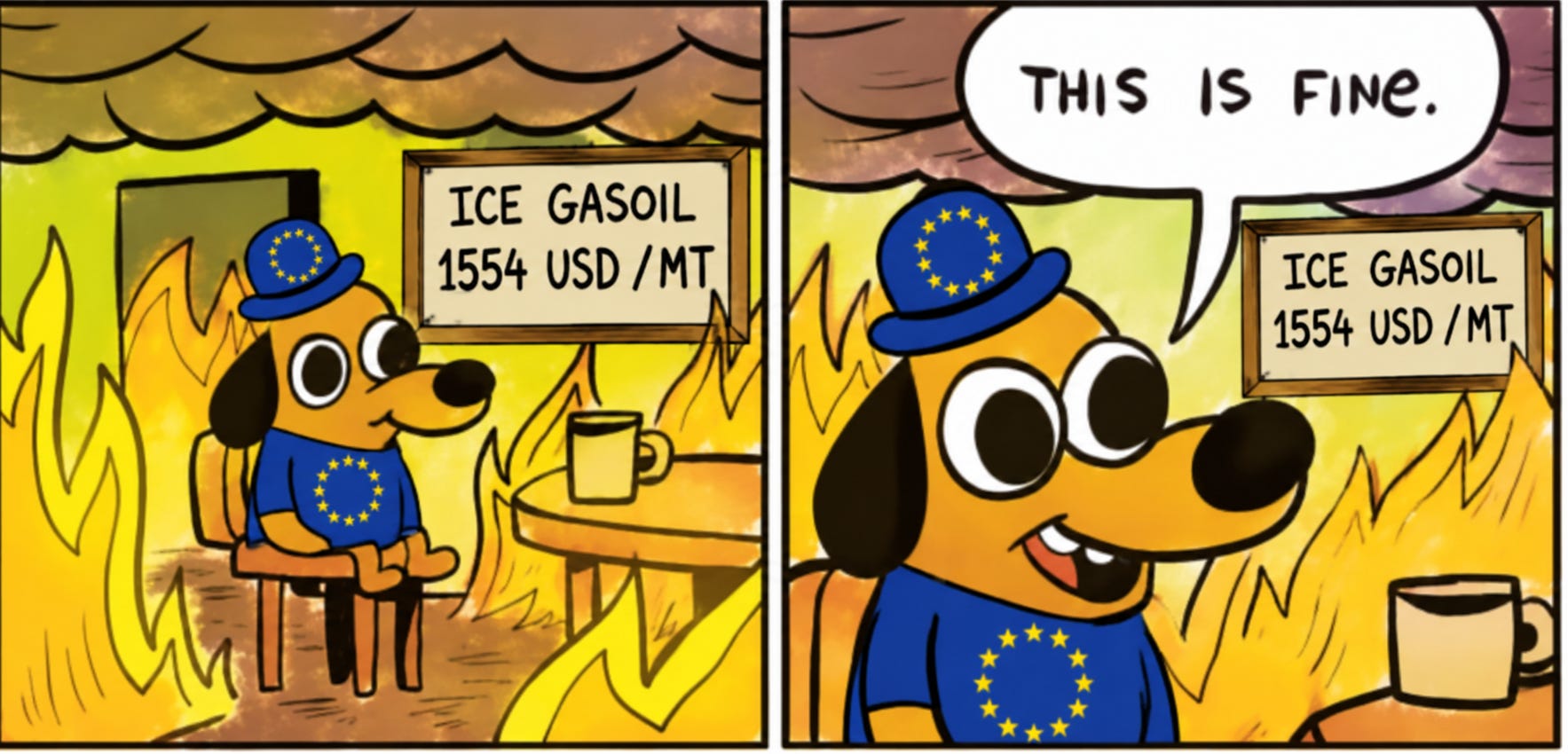
I opened the terminal on September 15th expecting the usual Monday-morning noise, and instead found the desk chat had gone dead quiet — the kind of quiet that's usually reserved for margin calls, not market moves. Turned out to be both. Forties, one of the key physical benchmarks underpinning Brent, had jumped to 136 dollars a barrel. As recently as August 26th the same crude was trading around 89. Under three weeks, and the move is already past fifty percent, with the April high of 147 now uncomfortably close — practically one nervous weekend away. Somewhere on financial Twitter someone will call this "a rally," the way you'd describe a latte getting more expensive at the airport. It isn't that. This is a market that has stopped being able to locate barrels where it needs them right now, and is paying a premium for it that would have looked like a terminal typo a month ago.
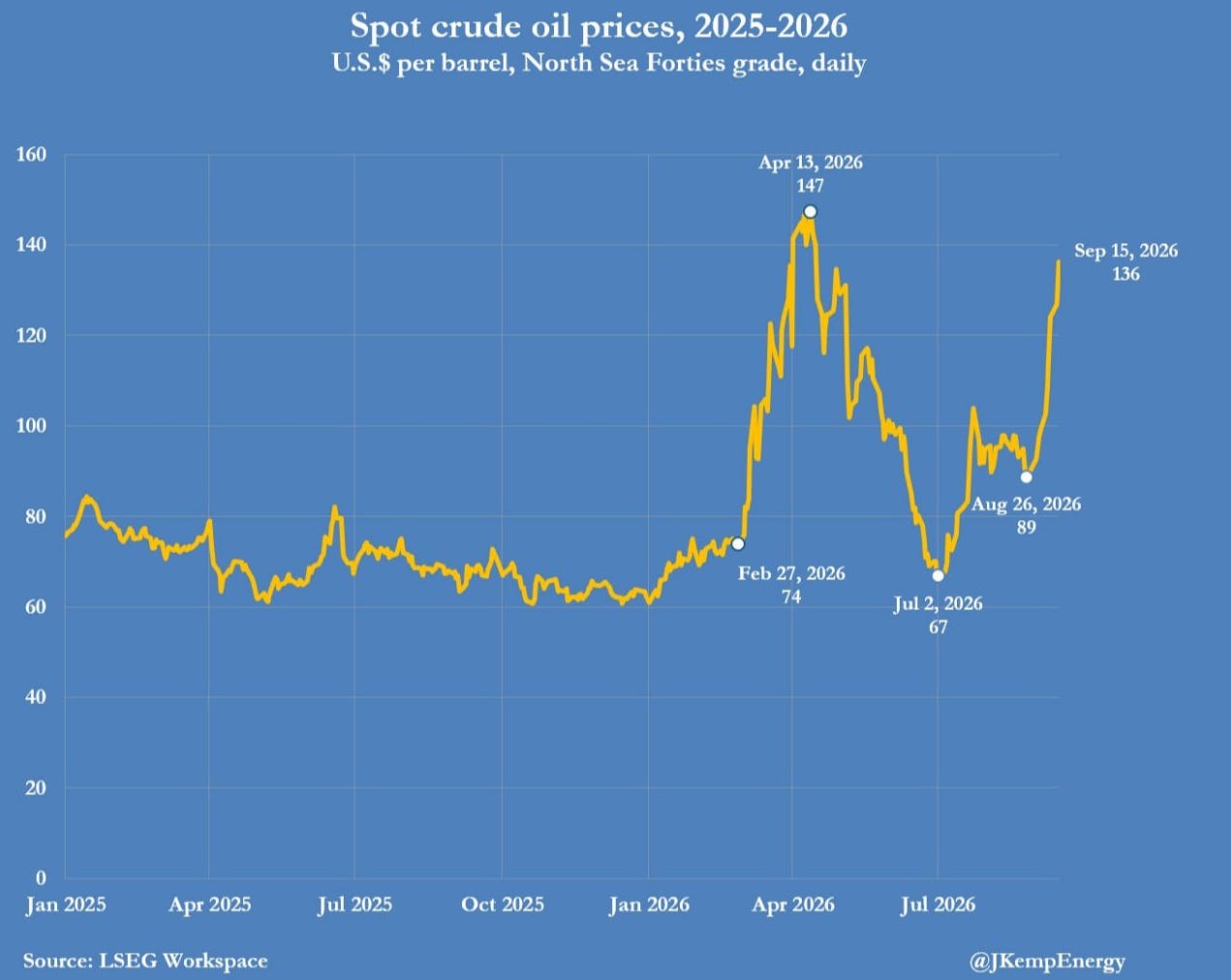
Let's start with the mechanics, because without them the humor turns into hysteria, and we don't do hysteria here — we run positions, not nerves. Forties isn't some abstract index; it's a physical North Sea crude basket, one of the components of the BFOE grade against which dated Brent is assessed. When Forties spot detaches from the paper market by this much, it means exactly one thing: somebody physically cannot find barrels where they're needed today, and is willing to pay to teleport crude across space and time. Teleportation, unfortunately, remains unavailable — what's on offer instead is a halted Saudi East-West pipeline and ongoing tanker attacks that are making life miserable for anyone trying to move a cargo through the Strait of Hormuz.
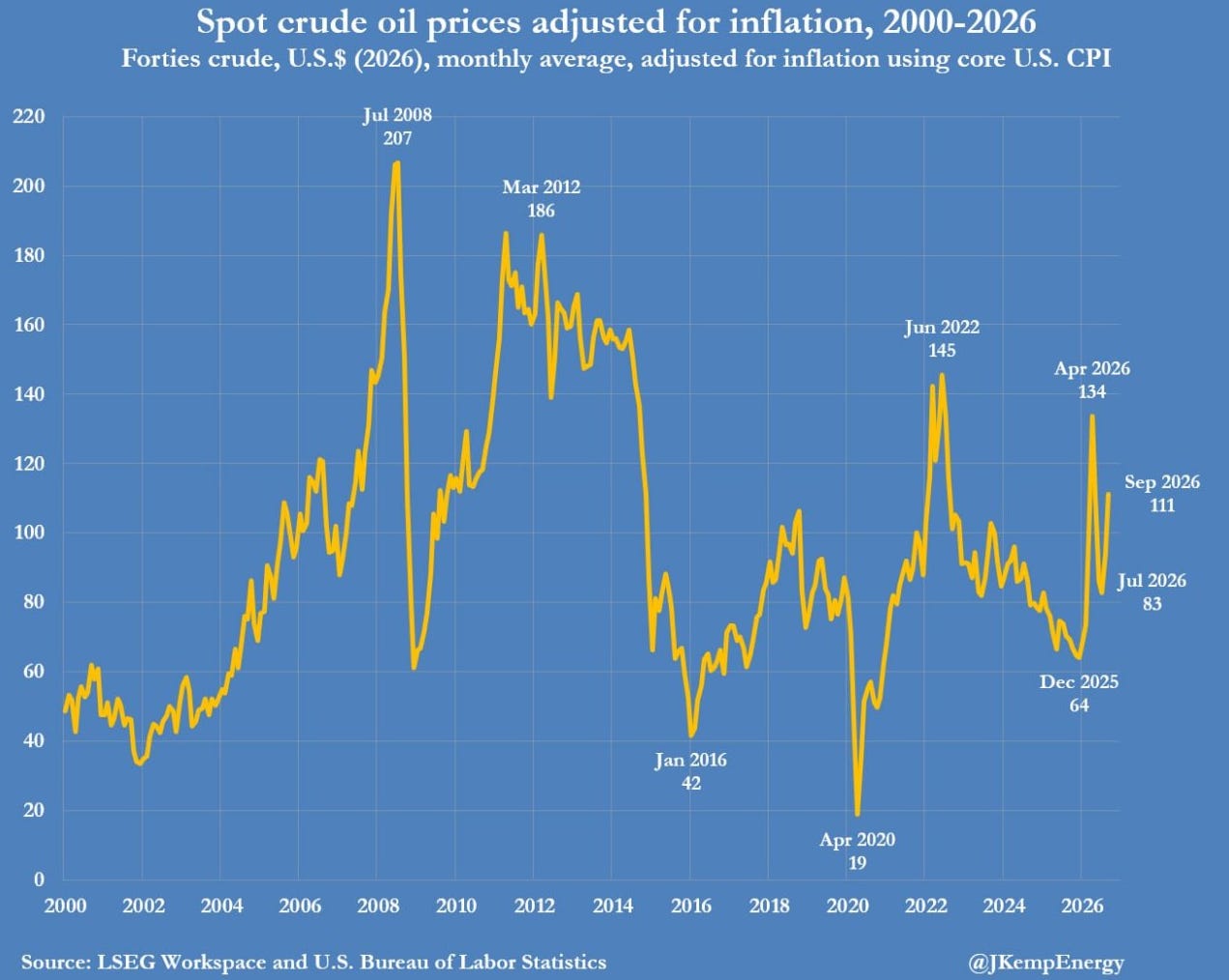
Which brings us to the more interesting number: the curve. The six-month Brent calendar spread has blown through 20 dollars a barrel. For anyone who trades equities exclusively and gets their information from cable news, that figure means nothing, so let's spell it out, since that's the entire point of this column. Backwardation is when oil for immediate delivery is priced above oil delivered six months from now. In a boring, well-mannered contango world, the market tells you: relax, wait, there'll be plenty of oil, just pay a little for storage. A 20-dollar backwardation over six months is the market screaming in your face: I don't care what happens in six months, give me a barrel today, and I'll pay for it like a front-row seat at a Champions League final. This is no longer a geopolitical risk premium neatly stuck on top of the price like a "handle with care" sticker. It's a structural shortage of physical supply, right now, and the distinction matters: you can hedge a risk premium with an option. You cannot hedge a shortage of barrels — you can only survive it if you hold the cargo, and go bust if you don't.
