



Something close to historic happened this week in the oil markets, and if you only look at the headline price you are missing the most important part of the story. Yes, Brent crude has exploded higher, trading at $93.32 on the ICE exchange as of today’s close — up from the mid-$60s where it spent most of December and early January, and now pushing toward territory not seen since the Saudi-engineered OPEC spike of 2023. Yes, gasoline prices are surging in tandem. Yes, the energy complex is on fire. But the number that should be keeping commodity traders and risk managers awake at night is not the outright price. It is the spread.
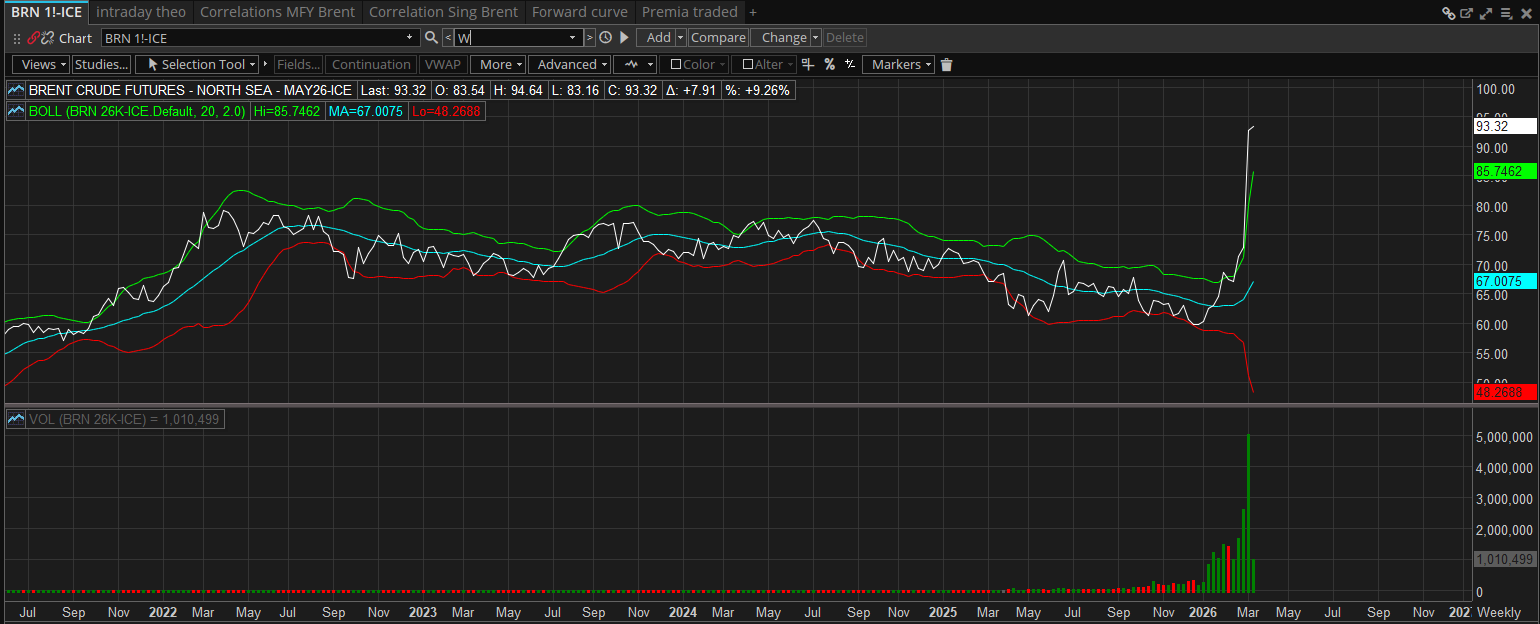
The three-month calendar spread in Brent — the difference between the front month and the contract three months forward — has gone parabolic. We are now looking at values that have not been seen since March 2022, in the immediate aftermath of Russia’s invasion of Ukraine. That comparison is not incidental. It is, in fact, the precise historical parallel we should be studying. The 2022 spike was not just a price event; it was a structural dislocation, a physical tightness so severe that the market was willing to pay extraordinary premiums to secure barrels today rather than wait for them tomorrow. What we are witnessing right now has the same signature.
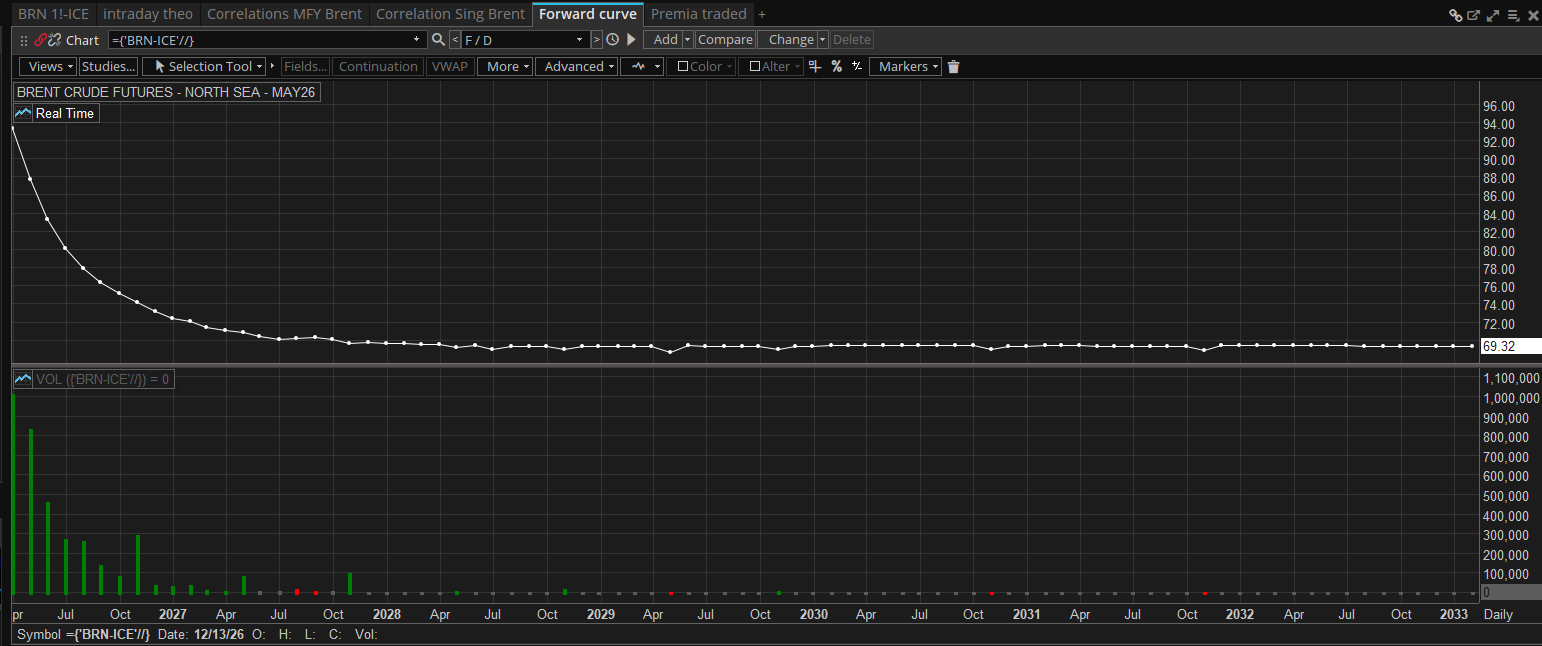
What the Screens Are Telling Us
Let me walk through each of the major instruments, because together they paint a picture that is more coherent — and more strategically deliberate — than most commentary is giving it credit for.
