

Nothing Is Broken Fast Enough
Everyone Agreed. Nothing Was Ready


Editing, when done right, is less about pruning and more about persuading a wayward forest to agree it was always meant to be a garden. So let’s take a sprawling conversation about long negotiations, shifting offers, the stagecraft of “good cop/bad cop,” the stubborn calendar of infrastructure, and the eternal temptation to rewrite yesterday’s story so it flatters today’s decisions—and shape it into a single, continuous, essay-length piece that keeps the humanity and a touch of humour while losing the proper nouns and the heat. Imagine a diplomatic melodrama performed behind frosted glass: you can’t see the faces, you can only hear the footsteps, and yet the plot still gives itself away to anyone who’s learned how to listen.
The first truth is that big geopolitical arrangements do not land with the crisp finality of a signed courier slip. They are frameworks—canvases, if you like—laid out to set boundaries and principles, after which everyone quietly retreats to sand the corners. The public hears “agreement” and imagines furniture arriving; professionals hear “framework” and imagine a to-do list written in three alphabets, none of which share a sense of humour. The press conference is usually the overture. The negotiation is the opera. And even if the overture hints at a triumphant finale, the opera will insist on the slow logic of recitatives, where the most consequential phrases are tucked into the least melodic bars. Inside this theatre, offers mutate. One day you’re told that acceptance is within reach; the next day the acceptance window has apparently shifted, and the same offer now costs more, comes with an extra clause, perhaps arrives in a less cheerful font. The cynic calls this brinkmanship; the optimist calls it momentum management; the realist calls it Tuesday. The simple script—two prices, meet in the middle—rarely applies. Instead, each cycle pushes conditions a shade less generous, accompanied by a chorus of “if you had agreed two moves ago, we’d have walked you home with a ribbon and a smile.” This is less a lie than a performance note. Negotiations run on the discipline of the possible, and the possible is a slippery creature, especially when both sides are eager to preserve optionality while performing decisiveness. You can be sure of one thing, though: the version of history that gets told later will discover a helpful new clarity about what “could have been.” Memory is a tireless copywriter, always eager to take your rough draft and turn it into a cleaner story, particularly when nobody plans to check the footnotes.
At some point, someone will ask whether the public words match the private logic and whether the headlines describing “proposals” reflect a single coherent author. Often they don’t. It is common to dignify a mutually tailored compromise as “the other side’s proposal” and then loudly agree to it in principle while quietly rearranging the furniture in the footnotes. It’s less deception than choreography, a way of letting audiences on both sides feel that their representatives stood firm on values while also accepting that reality must be paid in instalments. None of this is pretty; all of this is normal. If you prefer a less poetic image, imagine negotiating a lease for a building that everyone knows needs new plumbing. You can agree on square footage and rent and “good neighbour clauses,” but the real work will happen when someone opens a wall and meets the pipes.

Which brings us to the part of the story that makes headlines briefly and then becomes long, patient silence: infrastructure. When large-scale energy and utility systems are degraded, no one can promise a cheerful “back to normal by Thursday.” Time in this domain is measured not in headlines but in install windows, cure times, lead times, and logistics that still respect gravity. A major generation facility is a three-to-four-year proposition even when everything goes right, and things do not become less physical because an ambassador has an urgent voice. Substations, high-voltage equipment, protection systems, and the innumerable conduits that connect them move on the tempo of manufacturing and the tempo of ground truth, which has never been impressed by the heat of public impatience. Contingency gear—mobile generators, modular turbines, emergency substations—can and often does keep the lights flickering and pumps turning. It also runs on a diet of fuel and maintenance that makes accountants stare into the middle distance and whisper the word “temporary” with a reverence normally reserved for historical sites. These expedients are extraordinary for stabilization and poor companions for everyday life. They will not, cannot, substitute for a rebuilt backbone. The least cinematic damages are often underground. Heat and water networks dislike surprise vacations; they reward continuity. Shut them down abruptly and they sulk: pipes cool and contract, trapped water expands at inopportune temperatures, and joints remember they were installed by hands now retired. The resurrection is a construction project with extra archaeology: you dig for a fault and find a century’s worth of undocumented improvisations performing silently in the soil. You fix what you can see, then discover that stress travelled further and more creatively than you’d hoped. Here, optimism must share the room with patience, because any engineer will tell you that systems do not accept apologies—they accept replacements, testing protocols, and time.
The temptation—understandable, human—to ask “why not faster?” collides with the fact that complex systems punish haste. Triage is not an alibi; it’s the skill of keeping recoverable parts of a system from cascading into the parts that would have survived, given a chance. The wise choose stable, modest operating states over fragile return-to-form illusions, and every veteran has a story about the non-essential shortcut that became an essential failure, plus a powerfully unfunny lesson about how protection settings are the nervous system best handled by calm people at reasonable hours. We also run into the same arithmetic of scarcity everywhere: skilled technicians are not infinite, supply lines are not fictional, manufacturing slots are not wish tokens. In a world that grew accustomed to software metaphors—rollback, hotfix, patch—this can feel like an insult. It isn’t. It’s reality, which prefers to be courted rather than rushed. Because the universe insists on compounding effects, economics enters precisely when technology seems most persuasive. The money that rebuilds a grid also fills other, equally legitimate holes—hospitals, housing, food, schools. Capital will fund the urgent before it funds the optimal. The practical result is a new baseline: not collapse, but constrained normality, a civilized version of making do. People joke about “load schedules” and “brownout bingo” because humour is a pressure valve and because the alternative is silently mapping your life around rolling realities. Private contingency becomes public culture: battery packs, small generators, thermoses, a fierce affection for weatherproofing and redundancy. Look closely and you can see a society learning to carry more of its own infrastructure at the edges, not because it forgot how to plan but because it remembers that plans must survive contact with the day.
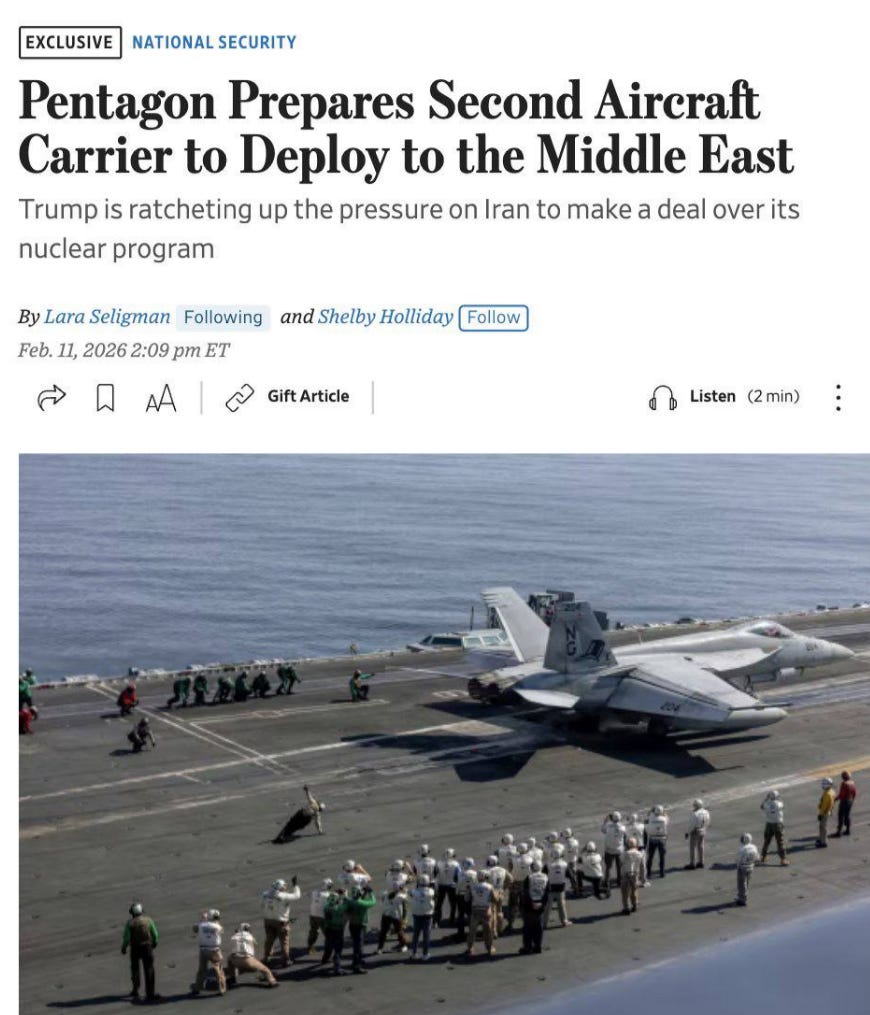
Into this context step the dramaturges of geopolitics with their well-worn scripts: the rotating roles of tough and tender, the declining-bid routine designed to elicit movement, the solemn announcement that the door which was ajar last week is now closed with a murmur of regret. The public has seen this before and calls it “good cop/bad cop”; the professionals call it “calibrating pressure.” And because storytelling is the lubricant of every hard machine, later we hear about paths not taken and doors that were once available to the wise. Don’t take it personally; it’s a technique. Also, do not count on the promises of “next time” unless they are signed, witnessed, and stored somewhere less fragile than a briefing. If the frosted glass brightens and shadows make larger gestures, it’s because the supporting cast grows or thins: external stakeholders infer trajectories and adjust, some with public sighs and some with quiet, strategic silences. Outsiders are fond of asking for crisp answers from systems that are intrinsically messy, and insiders are fond of reminding outsiders that ambiguity is not a moral failing but a negotiating position. The best advice for bystanders has been the same for centuries: do not volunteer your credibility to referee other people’s fights. You will be thanked briefly, then blamed forever.
Meanwhile, a different, less theatrical purge happens somewhere above the proscenium. Large, ambitious networks—political, economic, cultural—tend to accumulate an aristocracy of insiders. When the system grows tight, one classic response is a moral audit under the banner of reform. It rarely looks like velvet revolution and never looks like justice to everyone; it looks like withdrawal of patronage, reputation corrections salted with scandal, and a cautious thinning of those whose names once opened doors and now open news cycles. This is not exactly consolation, but it is a reminder that big systems sometimes save themselves by pruning their own décor and redistributing the invitations. There is also, often, the subplot of bottlenecks and choke-points far from the main stage but exceptionally relevant to the bill. Energy flows—liquid, gaseous, electron—depend on corridors that do not care how loudly we assert stability. Close, clog, or complicate these, and the ripple runs uphill into prices and downhill into everyday living. Scholars and forecasters will propose that crises here are epiphenomena of larger arcs; practitioners quietly adjust inventory and logistics and do their best to turn volatility into mere inconvenience. Somewhere between these two postures, policy is made, and families decide whether to buy another blanket or a small solar panel. If you’re looking for the secret theory, there isn’t one; there are only incentives, capabilities, and the occasional knuckleball from nature.
What, then, should we do with the tales about what “really” happened last month in some discreet meeting? You can listen, of course, and develop a taste for the genre. But the durable truths tend to be local, not because the world is small but because consequences are. People live in neighborhoods and apartments, under roofs warmed by systems that like to be treated as if they were respected. In that sense, the pragmatic approach is timeless: stop treating rumor as data; treat data like a nervous animal. Focus on the arithmetic that refuses to change—build times measured in years, equipment manufactured in months not days, crews trained over careers, budgets that do not multiply under inspirational speeches. Let the theatre proceed; watch it politely; do not mortgage your sanity to its plot. If there’s a lesson buried in all this, it might be simpler than it sounds. In geopolitics, as in infrastructure, the least celebrated virtues are the most valuable. It takes stamina to keep showing up for incremental progress when everyone else is costuming up for a breakthrough. It takes a boring kind of courage to stand in front of a microphone and say “not yet” without flinching. It takes discipline to triage quietly rather than perform competence loudly. It takes an editor’s patience to remove, rephrase, and reduce until the thing left on the page is honest and sustainable.
So we return to where we started, with the frosted-glass opera and the municipal archaeology and the temptation to declare definitive interpretations of half-heard arias. Try this instead: treat every bold pronouncement as a forecast subject to the weather; treat every “temporary measure” as a candidate for uncomfortable permanence; treat every outrage as a scheduled performance; treat every repair crew as a small miracle in hard hats. Expect the next offer to be slightly worse; expect someone to say you should have accepted the previous one; expect a deadline to become a suggestion. If we carry these expectations without surrendering to cynicism, we might find ourselves surprisingly resilient, which is a lovely word for stubbornness with manners.
And for humour—because without humour we are all just reports waiting for appendices—remember that no system likes being hurried; it prefers being respected. Pipes respond to warmth, not lectures. Transformers prefer clearances to compliments. Control rooms appreciate silence. Negotiations, like cats, come when they please. If we can remember that, if we can run our lives with the same mercy we wish systems would show us, then perhaps we will stop demanding that reality accelerate on command and start investing in the modest heroics that make reality livable: routines, redundancies, explicit lists, honest maps, arguments that end before midnight, and a collective agreement to value the unexciting. In that quiet, offers may clarify, grids may hum, pipes may settle, and the frosted glass may brighten just enough for us to see the outlines of a better arrangement taking shape—not because we shouted at it, but because we kept doing the work that lets complicated things function without applause.