I keep getting asked the same question by people who should know better, and it usually arrives dressed up as a paradox: how can the dollar be simultaneously the most cursed currency in the world, the one everyone is supposedly fleeing, the one the BRICS summit communiqués love to bury, and also the strongest it has been against a broad trade-weighted basket in twenty years, propped up by a Fed funds rate that is itself a monument to how badly Washington needs to keep foreigners interested in financing its deficit. Dedollarization and dollar strength are not supposed to coexist in the same sentence, and yet here we are, watching both happen at once, which tells you that whoever built the mental model people are using to think about this has confused two entirely different markets. One is the plumbing. The other is the currency. They rhyme, they are related, but they are not the same thing, and every time some macro tourist conflates them you get another confidently wrong Substack post explaining the imminent death of the greenback.
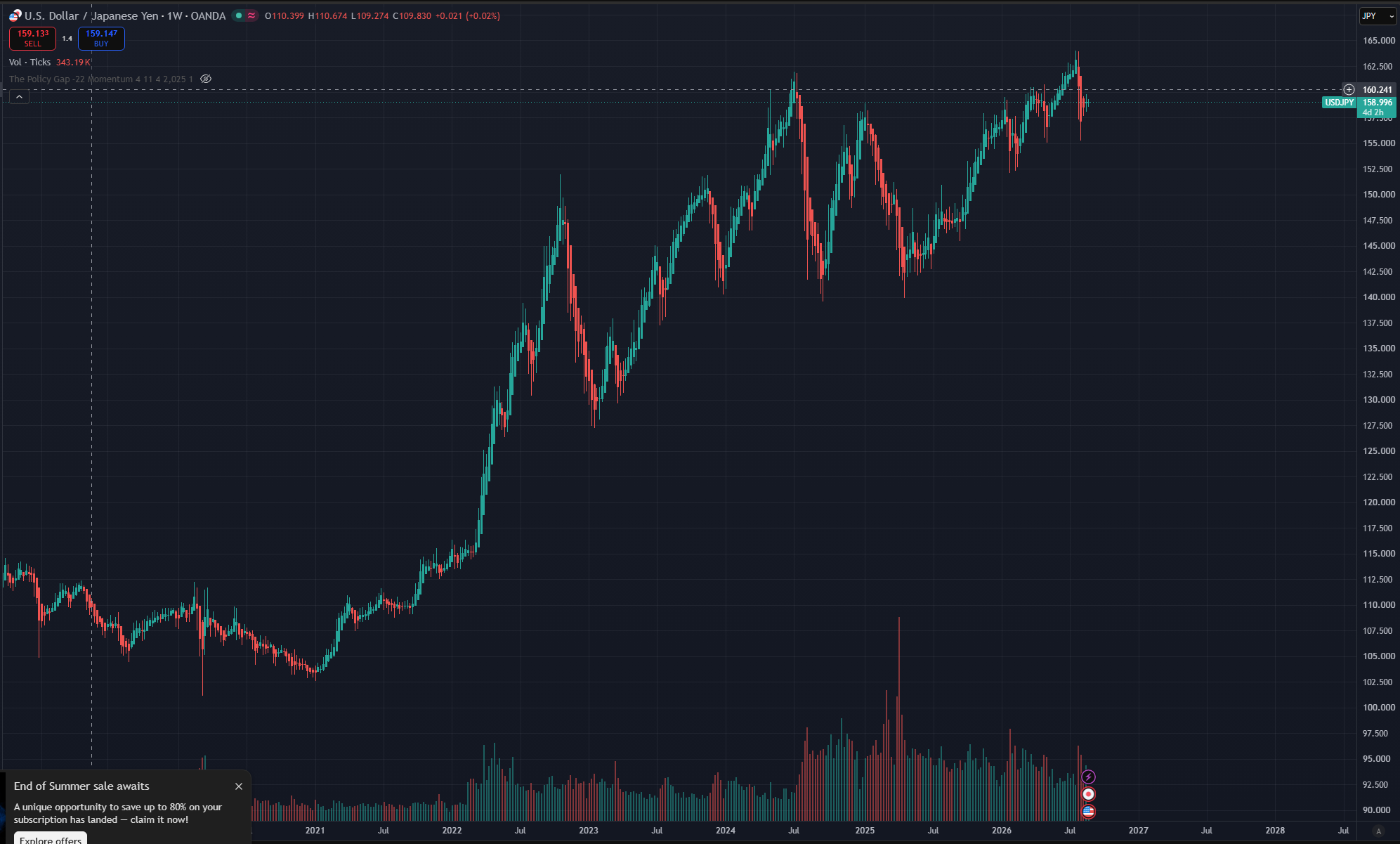
Let me deal with the plumbing question first because it is the one nobody actually understands, including, I suspect, most of the people running central banks. There is no committee holding the dollar up. I want to be extremely clear about this because the “someone is propping it up” framing gets repeated so often it has become load-bearing folklore. Central banks intervene in FX markets constantly and lose constantly, because the market, in aggregate, across every desk and fund and corporate treasury doing carry trades, is simply a bigger animal than any monetary authority. The Bank of Japan has run intervention after intervention over the decades — I remember the yen grinding toward 76 back when everyone thought that was the apocalypse, and the BoJ threw four separate interventions at it starting somewhere in the low 80s, and the yen calmly continued on its way regardless. Rate differentials, similarly, get cited by every textbook as the master variable in FX, and then you look at realized volatility in G10 currency pairs running ten, fifteen percent a year and you realize nobody trading real size is pricing off central bank policy rates as a primary signal. What actually drives FX in the modern era, and has for twenty-odd years now, is funding flow — which currency is cheap to borrow in, and whose banking system has enough spare capacity on its balance sheet to extend that funding for speculative purposes. It’s a liquidity and funding-cost story dressed up in a rate-differential costume, and macro generalists wandering into that market usually get eaten alive because they’re solving the wrong equation.