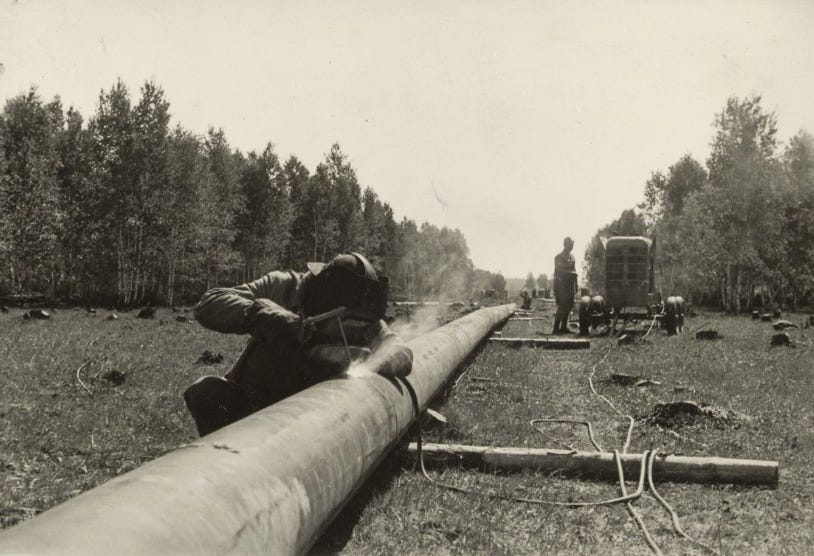
There is an old Soviet joke that circulated among pipe-rollers — workers at the great steel mills who produced the pipelines threading across the USSR. Their unofficial motto: the pipe belongs to the country, the pipe belongs to the people (Труба - стране, труба - народу).
It was a double-edged gag. The pipe fed the nation. The pipe also buried it, kilometre by kilometre, in obligations that could never be repaid.
I have been thinking about that joke a great deal lately, because we are living through two simultaneous pipe stories — one financial, one geopolitical — and the market has priced exactly neither of them.
Let me take them in turn.
I. The Private Credit Pipe
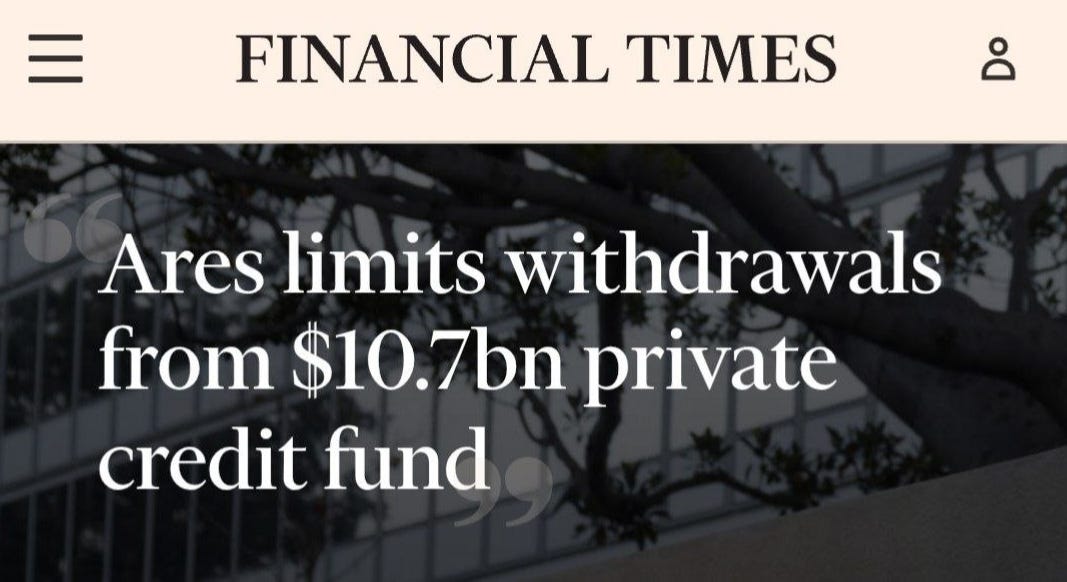
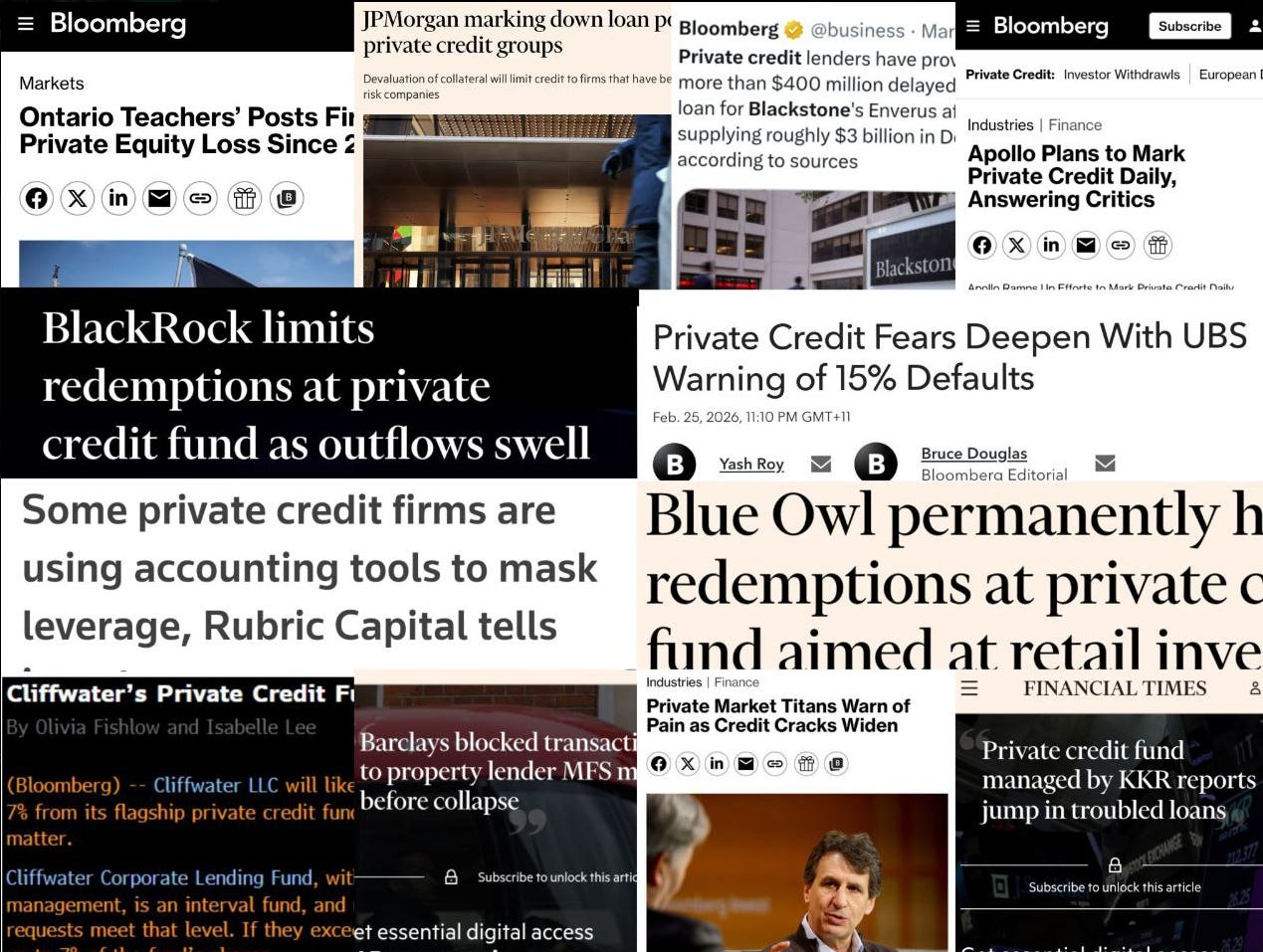
Somewhere in the last two weeks, something quietly cracked in the American private credit market. BlackRock, Blue Owl, JPMorgan — several large funds managing something in the neighbourhood of $300 billion combined — have suspended redemptions. The gates are down. Investors who thought they owned liquid-ish exposure to the infrastructure of the AI age have discovered they own something far less tractable: claims on assets that were never worth what the models said, extended to borrowers who could not survive a real cost-of-capital regime.