


For four centuries, the story of the world economy was the story of European commodity arbitrage. The continent did not rise because it invented a better moral framework for commerce, nor because it discovered the secret of compound interest before anyone else. It rose because it solved a physical problem: how to extract resources from the periphery fast enough to fund innovation at the center, while dumping the social and industrial waste of that innovation back into the colonies. This was not a financial trick. It was a geographical and logistical feat, and understanding it is the only way to understand why Europe is finished, and what comes next.
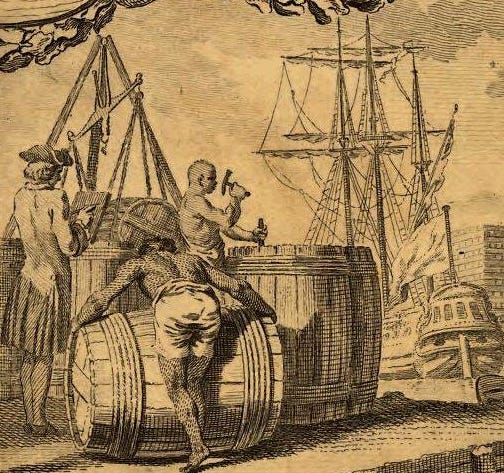
You have capital, you have labor, you mix them with Protestant ethics or ethnic folklore about financiers, and out pops the Industrial Revolution. This is a fairy tale. If you look at the actual material flows of the sixteenth through nineteenth centuries, what you see is a pump. Raw materials—cotton, timber, sugar, tobacco, minerals—flowed into European ports. Finished goods—textiles, weapons, refined metals—flowed out. But the crucial flow, the one that made the system sustainable at a speed no previous civilization had managed, was the flow of obsolescence. When a new technology emerged in Lancashire, the old technology did not die there. It was shipped to the periphery, where it continued operating at lower margins, with lower wages, and without the political power to resist the transition. The social cost of progress was not paid in Manchester. It was paid in Calcutta.
This is the element that pure economic theory misses. In a closed system, technological progress creates crisis. The spinning jenny destroys the livelihood of hand-spinners. They riot, they organize, they demand protection. The state faces a choice: slow down innovation or face instability. Europe did not solve this dilemma through superior institutions. It solved it through expansion. The colonial system created an externality zone where European capital could park its obsolete assets while deploying fresh capital at home. A mill in Birmingham could be modernized because the old mill equipment was sold to Egypt or India, where it operated for another generation, not profitably enough to attract new investment, but not unprofitably enough to shut down immediately. The crises of capitalism were not overcome; they were geographically displaced. This is why the speed of European development was artificial, dependent on the continuous opening of new peripheries, and why the moment that expansion stopped, the underlying contradictions returned.
The geography of Europe made this possible in a way that no other region could replicate. The continent is a fractal coastline of peninsulas and micro-climates, packed into a small space. Within a few hundred kilometers, you move from Mediterranean olive groves to North Sea fisheries, from Atlantic timber to Alpine minerals. Before the early modern period, this meant little; agricultural technology was too crude to exploit the differences fully. But as shipping and metallurgy improved, these micro-regions began to specialize. One valley made wool. The next made wine. A coastal city built ships. An inland city forged cannon. They were close enough to trade cheaply, yet distinct enough to resist total homogenization. This was not a market in the abstract sense. It was a physical network of commodity flows, and the constant competition between these regions meant that no single technological standard could dominate for long. If Flanders lagged in dyeing techniques, Italian cities took the lead. If Venice grew complacent in shipbuilding, the Dutch surpassed them. The commodity map of Europe was a war map, and the prize was control over the next logistical bottleneck.
